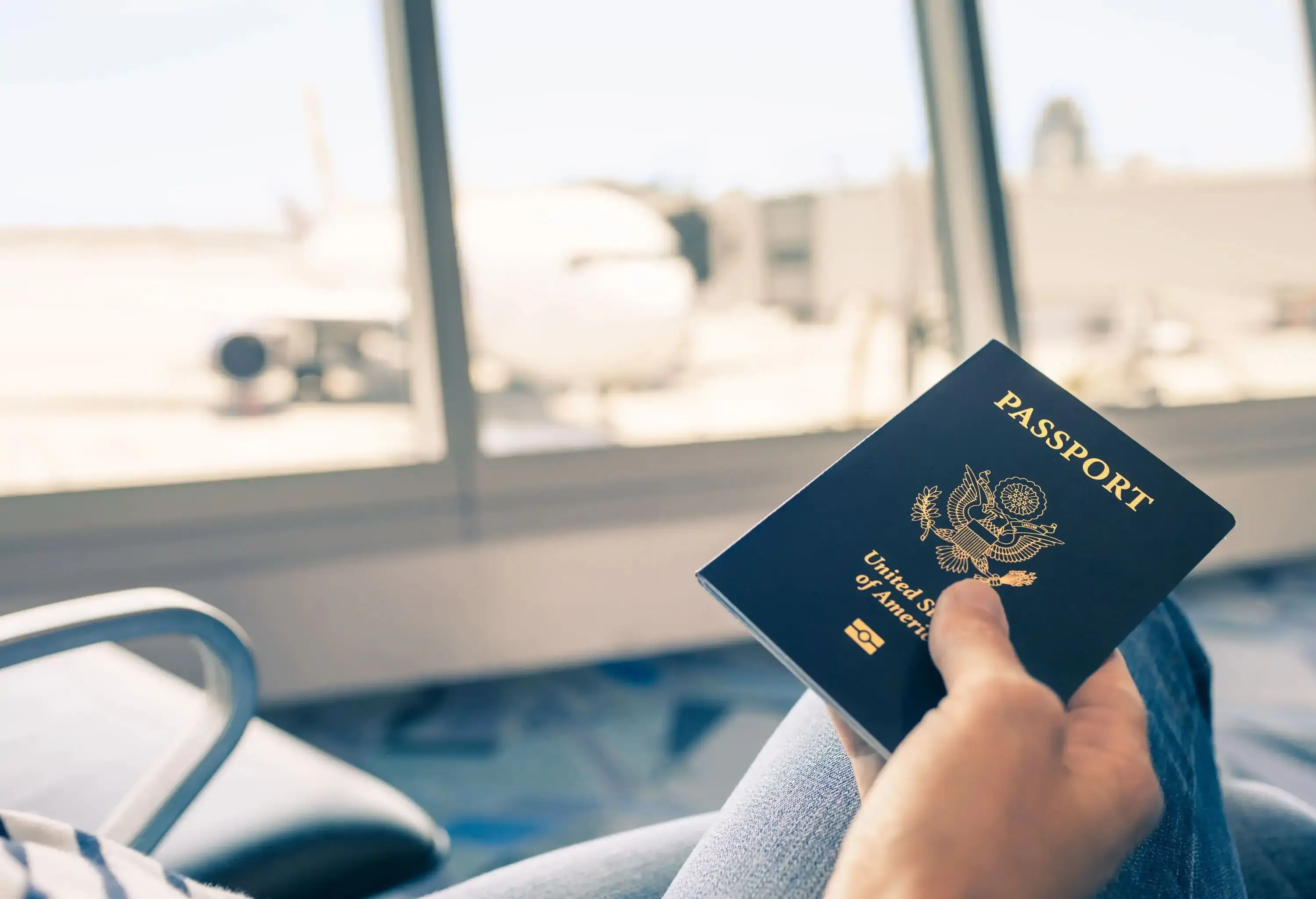

If you hold a UK or non-EU passport and are travelling to the Schengen area, the new EU Entry/Exit System (EES) has changed how you cross the border. This guide explains what EES is, when it started, who it affects, and how to get through the airport without any last-minute surprises.
In this article
What is the EU Entry/Exit System (EES)?
Do UK travellers need EES?
How EES registration works at the border.
Will EES checks cause delays at the airport?
What happens if I miss my flight because of EES delays at border control?
How EES affects the 90/180-day rule for UK short stays.
What is the difference with the ETIAS?
FAQs
What is the EU Entry/Exit System (EES)?
The EU Entry/Exit System (EES) is a digital border database that records when non-EU nationals enter and leave Schengen countries on stays of up to 90 days. Put simply, it replaces the old passport stamp with a digital record.
Your digital EES record is valid for three years. However, you must travel with the same passport used to create it. If your travel document changes, your details will need to be updated at the border.
What data does EES record?
Each time you cross a Schengen border, the system logs:
- Your passport details
- Your entry and exit dates
- A facial image
- Your fingerprints
When did EES start?
The EES system launched on October 12th, 2025, and has been progressively rolled out across Schengen borders. It became fully operational on April 10th 2026, covering all external border crossing points across participating countries.
Why did the EU introduce EES?
The EU built EES to modernise external border checks and strengthen security. The system helps authorities identify overstayers, reduce document and identity fraud, and track irregular movements across Schengen borders.
The results so far back that up. Since launch, EES has registered over 52 million entries and exits, flagged more than 27,000 refusals of entry, and identified over 700 individuals as security risks (source: home-affairs.ec.europa.eu).
Do UK travellers need EES?
The EU Entry/Exit System (EES) applies to most UK passport holders visiting Schengen countries for holidays, business trips, or other short stays. A short stay means up to 90 days in any 180-day period.
Note: Children are not exempt from EES. Travellers of all ages go through the system. However, children under 12 do not need to provide fingerprints. A facial image may still be taken.
The Schengen countries covered by EES are:
Austria, Belgium, Bulgaria, Croatia, Czechia, Denmark, Estonia, Finland, France, Germany, Greece, Hungary, Iceland, Italy, Latvia, Liechtenstein, Lithuania, Luxembourg, Malta, Netherlands, Norway, Poland, Portugal, Romania, Slovakia, Slovenia, Spain, Sweden, and Switzerland.
Are there any exceptions?
Several groups are exempt from EES checks entirely:
- UK nationals legally resident in a Schengen country, provided you can show proof of that status
- Holders of a valid residence permit or long-stay visa for a Schengen country
Check the full exemption list on the official EU travel-europe.europa.eu website.
How EES registration works at the border.
There is no EES application to complete before you travel, no separate online form, and no fee. Registration takes place upon arrival, and passports will no longer be stamped for Schengen countries.
If you see a website selling an ‘EES permit’, ignore it entirely. It’s fraudulent.
Your first trip under EES will follow these steps:
- Present your passport to a border officer as normal.
- You may be directed to a dedicated booth or kiosk.
- A digital traveller record is created in your name.
- A facial image is taken.
- Your fingerprints are scanned.
On later trips, things should move faster. Because your biometric record already exists, border staff will typically verify a fingerprint or facial image alongside your passport, rather than creating a new record from scratch.
Self-service system to reduce queues.
Some locations offer self-service kiosks or limited pre-registration tools. Eurostar at London St Pancras International and Eurotunnel Le Shuttle at Folkestone both have dedicated pre-registration areas, for example. These allow you to register with the system, verify your existing record, or update your data before heading to the passport control booth.
The passport control officer will then already have your identity, biometric data, and permitted length of stay on file. They may ask you a few further questions before granting or denying entry, but this should help expedite the process overall.
Availability varies by country and border crossing, so always follow official advice from your carrier, port, or airport.

Will EES checks cause delays at the airport?
EES passport checks add time at border control. Your first trip after registering tends to take the longest, as border officers collect your fingerprints and facial image for the first time.
Expect queues and delays as the system rolls out, as well as during busy travel periods like summer holidays and at the busiest airports, ferry ports, and rail terminals.
Always check your transport provider’s guidance on arrival times before you travel.
You might also be asked questions about your trip, such as where you’re staying, how long you plan to stay, and the purpose of your visit. Keep your accommodation and onward travel details somewhere easy to access, whether that’s printed or on your phone.
One more thing to expect on the way home: EES records both entry and exit movements, so you may be asked to provide a fingerprint or facial image again when leaving the Schengen area. Factor this into your departure timing.
What happens if I miss my flight because of EES delays at border control?
If you miss a flight due to EES delays, airlines are not automatically obligated to rebook you for free. Under EU regulation EC 261/2004, airlines can classify border delays as “extraordinary circumstances,” which means they may avoid paying compensation.
That said, there are a few things you can do:
- Go straight to the airline’s customer service desk the moment you realise you’ve missed your flight.
- Ask for written confirmation of the delay from border staff if you can get it.
- Keep your boarding pass, any correspondence from the airline, and a note of the time you joined the queue.
How EES affects the 90/180-day rule for UK short stays.
The EU Entry/Exit System (EES) does not change the underlying Schengen short-stay rule. UK citizens without a visa or residence rights are still limited to a maximum of 90 days in any rolling 180-day period.
What EES does change is how strictly that limit is enforced. Instead of relying on manual passport stamps, border authorities now have a precise digital record of every entry and exit.
Frequent travellers, second-home owners, and anyone mixing work and leisure trips need to track their days carefully. Penalties for overstaying vary between member states, so check the rules for each country you plan to visit.
The EU just launched an online web service tool allowing travellers to check their remaining authorised stay. But to be on the safe side, we strongly advise to keep your own records.
What is the difference with the ETIAS?
Don’t confuse EES with ETIAS. EES is the biometric border check already in operation. ETIAS is a separate travel authorisation scheme, similar to the US ESTA, expected from autumn 2026. The EU has not yet opened ETIAS applications.
The bottom line: EES is a new border process, not a travel ban. Turn up with a valid passport, keep your trip details handy, and allow plenty of extra time.
FAQs
EES started its progressive roll-out on 12 October 2025 and became fully operational across all Schengen border crossings on 10 April 2026.
You do not need to apply for EES or do anything before you travel. Registration takes place automatically at the border on your first visit to the Schengen area after the launch of EES.
Yes, EES checks do take additional time, particularly for first-time registrations, and early reports from airports in Spain, France, and Portugal have indicated longer wait times at border control during busy periods. The UK government advises travellers to be prepared to wait longer than usual, especially during peak travel times such as school holidays.
ABTA recommends treating the standard two-hour arrival time for flights from Europe as a minimum, and checking specific advice from your airline, port, or travel operator before you depart.