
In this guide, I’m sharing my best long haul flight tips so you can actually enjoy the journey. Whether you’re flying economy on a red eye or tackling a 16-hour ultra-long-haul, these suggestions will help you stay comfortable and arrive feeling refreshed.
How to survive a long flight: the essentials
Here’s a quick survival plan to get you through.
- Dress in layers and slip-ons: Stay warm, stay comfy and make security easier.
- Buckle your seatbelt over your blanket so you won’t get woken during turbulence checks.
- Pack light with a capsule wardrobe to avoid lost luggage and minimise hassle.
- Bring snacks and hydrate hourly: Avoid salt, sip water (about 300ml per hour) and skip alcohol.
- Choose the right seat for comfort: Exit row or bulkhead for tall travellers; mid-wing window for sleep.
- Time your naps: Sleep in sync with your destination’s time zone to minimise jet lag.
- Use noise-cancelling headphones (or earplugs).
- Move every 90 minutes: Walk the aisle, stretch ankles or wear compression socks.
- Charge and download: Bring a power bank, pre-download movies or podcasts and dim your screen.
- Use KAYAK tools: Filter Wi-Fi flights, set Trips alerts and check Flight Tracker for gate updates.
Whether your goal is to sleep, work or fly smoothly with kids, pick your goal and follow these expert long haul flight tips for a comfortable journey:
1. Dress in layers and slip-ons
Here are the most essential items for staying comfortable on long haul flights:
- Light layers
- Comfy socks
- Slip-on shoes
- Pillow and blanket
Regardless of the climate at your destination, multiple light layers are your best friends on a long haul flight. I’m always cold on a flight, so I like to wear layers topped with a light down vest that I can crush into nothing if I’m travelling to a warm climate. I roll up the vest and use it as a travel pillow.
Wear slip-on shoes. They’re good for security and ideal for slipping off on the plane in favour of slippers or grippy socks. Compression socks are also a great choice if you’re concerned about circulation or feet swelling at high altitudes.
Many people love to bring a travel pillow, but I don’t like carrying an extra item. If you must have a pillow but feel the same way, look into one of the many inflatable travel pillows now on the market. I always travel with a lightweight but warm alpaca scarf. It makes the perfect blanket on a plane and still looks elegant in the evenings if I need a layer.
2. Buckle your seatbelt over your blanket
I learned the hard way that zealous flight attendants may wake you up to see if your seatbelt is fastened if they can’t see it.
Just buckle your seatbelt over your blanket (or layers of clothing). If you’re able to sleep through turbulence and the flight attendants come around, they won’t wake you.
3. Pack light with a capsule wardrobe
When I was young, my travel-obsessed father had one rule: no checking bags. It’s still the way I travel today, even if I’m going on a trip for a week.
Although this tip won’t necessarily make you more comfortable on your flight, it may save your sanity when you arrive. I create a capsule collection for travel. I choose a single type of neutral colour as a wardrobe base. For instance, navy, black or brown.
I don’t mix the neutrals, but I’ll layer colour on top. For example, if the base is black, every additional item of clothing I bring must work well with black. Pack this way, and you’ll be amazed at how few things you need on a trip.
Plus, if you pack light enough to only bring a carry on, you don’t have to worry about lost luggage, which can really throw a spanner in the works of any vacation.
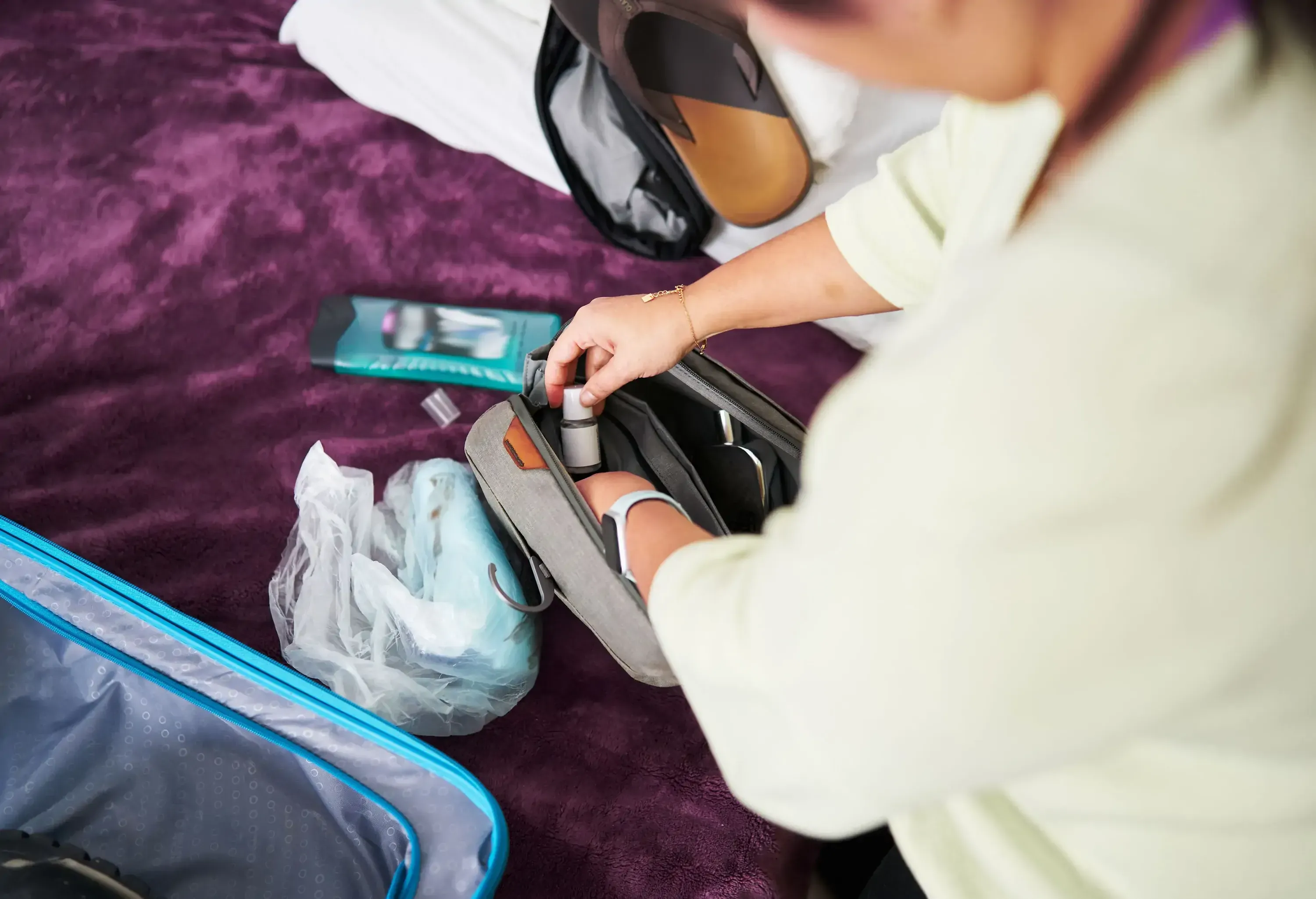
4. Bring snacks and hydrate hourly
When you’re crossing time zones, your flight attendants are usually syncing the meals with your destination, which means that you may get a meal when you’re not hungry and may be hungry for hours before the next meal arrives.
I usually bring a little something on a flight, like almonds or granola bars in case the latter happens. I also travel with someone who tends to get “hangry,” so throwing him some snacks is good for everyone.
Although I love salty snacks like crisps, I try to stay away from them on long flights to avoid dehydration and swelling. I also try to make a point of taking some sips of water every hour.
5. Choose the right seat for comfort
On wide-body planes, the economy seats with the most room are the bulkhead seats in the front of the cabin or the exit rows. If you’re tall, this is your best bet and one of my top long haul flight tips.
But keep in mind that the bulkhead wall is where the airlines put bassinets for babies, so if you’re bothered by crying little ones, this may not be for you. Also note that your seat’s TV will likely be stored in your armrest and that can feel awkward to some travellers. The catch-22 is that the further up in front you sit, the quieter the actual airplane noise is since most plane engines are located under the wings.
If you don’t need the extra legroom, consider booking a seat towards the back. Most people don’t love the back row, which can be good news if your flight isn’t full – but try for a few rows up from the bathrooms.
6. Time your naps and pre-empt jet lag
If you’re going through several time zones, your body will take a hit. You can prepare for a trip by adjusting your sleep in advance or booking a flight that arrives during the day.
For those who can sleep on a plane, booking a red eye is a good decision. The faster you’re able to adjust to your destination time zone, the better rested you’ll feel overall.
7. Use noise-cancelling headphones (or earplugs)
On a long flight, I bring large, noise-cancelling headphones, and it’s not for the terrific audio quality.
For some reason, the chattiest passengers usually find their way to me. On a flight years ago, I learned that if I immediately put my giant headphones on when I sat down in my seat, my fellow passengers would think I was very busy — even if the headphones weren’t attached to a device. No confrontation is needed.
Bringing noise-cancelling headphones or ear plugs also makes a massive difference when it comes to crying babies, chronic coughers, or other irritating distractions common on crowded flights. They’ll also make it much easier to sleep.
8. Move every 90 minutes
Sitting for long periods of time, dehydration, preexisting health conditions, cramped seating and high altitudes aren’t the best for circulation.
Get up every 90 minutes or so to walk the aisles, do ankle rolls and stretch. As mentioned previously, consider compression socks if you are particularly concerned about your circulation or feet swelling.
Moving around is also just a generally good idea to pre-empt the aches and pains associated with sitting for a long time. Develop a little circuit of exercises or stretches to do on the plane – and is one of the most important long haul flight tips.
9. Pack a charger
If you’re bringing electronics on a long-haul flight, you’ll want to make sure they stay charged. It’s always a good idea to bring a portable charger for small devices just to be on the safe side.
Turning down the brightness and closing apps can also make your battery last longer, too.
10. Use KAYAK tools
Some of the best survival tips for long-haul trips, of course, are the ones you plan in advance.
First of all, KAYAK’s mobile app lets you access mobile-only deals and view your trip details on the go. And if you have multiple itineraries to juggle, try the KAYAK Trips tool to organise them.
As noted throughout this post, make the most of KAYAK filters to find Wi-Fi flights or red eyes if you’re a good sleeper. On the left side of your screen, click on “Flight quality,” and in the drop-down, click on “Show Wi-Fi flights only.”
Long flights FAQs
- Don’t drink alcohol or caffeine.
- Don’t sacrifice comfort for fashion (I’m looking at you, stiletto heels and miniskirts).
- Don’t forget to moisturise and drink plenty of water.
- Bring plenty of reading material, lots of work and download media for offline use.
- Bring a trusty scarf or blanket, large headphones or ear plugs.
- Bring a good portable charger.
- Pack some healthy snacks, buy a water bottle or two before boarding or refill a reusable bottle.
Now you have the tools to prepare for a long flight, there’s no need to worry about it. It’s your turn to make a plan that suits your requirements to deal smoothly with your long haul flight.