
To be bored of flying is to be bored of life. Despite all the annoying things about airports and budget travel that bad comedians have documented for years, getting on a flight is inherently exciting. There’s always a childlike thrill that comes from some aspect of the experience – the take-off, that sublime window view, the jumping feeling in your stomach as the flight comes in to land.
But the conditions under which we fly are important, and the history of commercial aviation is defined by a paradoxical progress. In the so-called ‘Golden Age’ (think Catch Me If You Can) there was more legroom, more care was taken with aesthetics, and ironically the air was cleaner because all the smoking required regular ventilation. But as the drawbacks of that period receded and flying became accessible to more and more people, some say the overall quality of the experience did too.
Thanks to technological advances it looks like the future might combine the luxury of the Golden Age with the populism of the current era. Could it hold the best of both worlds? Here are some innovations that suggest so.
Why fly without Wi-Fi?
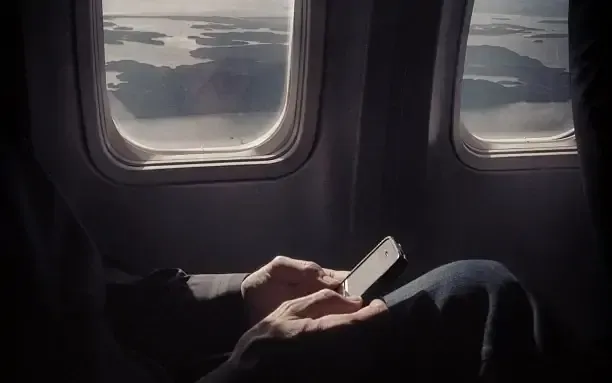
Anyone flying on Emirates, Norwegian or JetBlue recently would’ve noticed the arrival of a new phenomenon. Although divisive, the emergence of Wi-Fi on international flights is definitely an innovation worth noting.
In case you’ve wondered how it works, it basically involves the aeroplane using a specially built receiver and transmitter on its undercarriage to mediate mobile phone signals from satellites and towers on the ground. Because the signal’s then distributed and divided between all the devices being used on the plane, airborne Wi-Fi is still on the slow side; but in a few years you’ll have no excuse whatsoever to ignore your boss’ emails. This is one innovation we’re more than happy to wait for.
Say goodnight to jet lag
Jet lag was considered the sine qua non of rapid global travel. “Sure,” the gods declared, “you may now traverse this planet in a few hours when it once took your ancestors years of toil and struggle. But the price you shall pay for this luxury is being a bit drowsy for a few days.”
“Okay. That seems fair,” humanity replied.
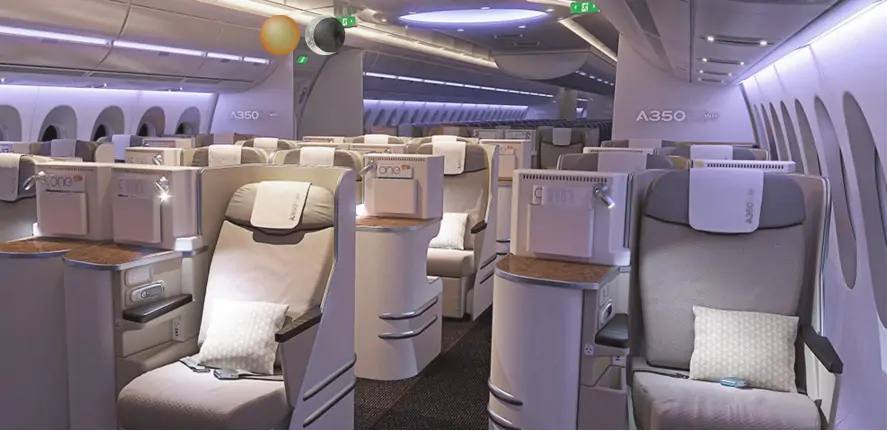
But we’ve finally managed to hack that particular reminder of our own biological embodiment. Airbus has designed a new plane, the A350 XWB, which houses LED lights that can generate 16 million different colour combinations. How does this help jet lag, we hear you ask?
Well jet lag – or circadian dysynchrony for those in the know – is a disruption to the body clock caused by external stimuli, notably light. The point of the LEDs is to mimic the rhythms of sunlight, to trick the body into thinking it’s experiencing a normal, non-artificially ruptured day. The airplane debuted last year on Qatar Airways, and while they don’t fly from the UK at the moment you can board one from the US, Germany, Australia or Singapore if you’re travelling to Doha. Check to see if there’s a flight available: you’ll thanks us in your dreams.
You’re very own 2-Bedroom Flat (…30,000ft in the air)
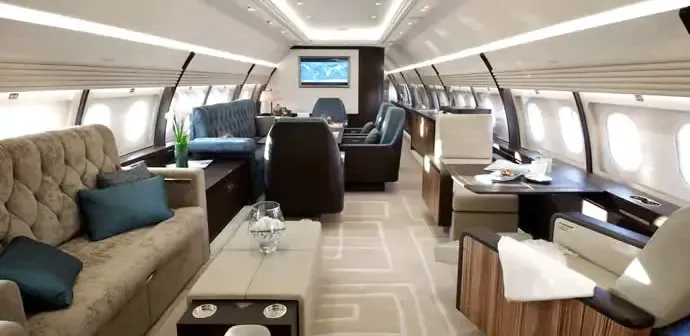
The level of opulence available in first class cabins these days would make Donald Trump blush. Etihad Airways’ ‘Dream Suite’ includes a 125 square foot living room, 32-inch flat screen TV, bedroom and a bathroom with an actual shower. Singapore and Virgin Atlantic are also in the game with fluffing suites for the 1% – but with a going price of up to £45,000 they’re unlikely to be yours anytime soon. Or, let’s be honest, ever.
But the opulence isn’t just for first class: the most exciting innovations are those that make economy even more comfortable. A few airlines are introducing economy seats than can transform into beds at the touch of a button. Air New Zealand’s ‘Skycoach’ sees the armrests lifted up and the seat base extended so a row of three seats can turn into a comfy bed for two. ‘Cuddle Class’ as it’s known will cost you the price of two standard economy seats and a third for half the price. If you’re travelling all the way to the antipodes it might be a worthwhile investment.
Windowless cabins

This doesn’t exist yet, but if implemented, would transform the flying experience. Some months ago the Centre for Process Innovation proposed creating windowless cabins, which they imagine needs 10 years of research and development before becoming commercially available.
Instead of having regular windows, passengers would get surfaces of organic LEDs that use cameras to display what’s on the outside – the screen-cum-walls could be used to zoom in on sights and play the in-flight entertainment services.
The rationale is economic. Airlines want their planes to be lighter to reduce fuel consumption (as oil becomes more expensive), and one of the main reasons plane fuselages are heavy, apparently, is because the presence of all those tiny windows require them to be strengthened. So if there are no windows, the fuselage can be lighter and airlines can use less fuel.
Flying with less guilt
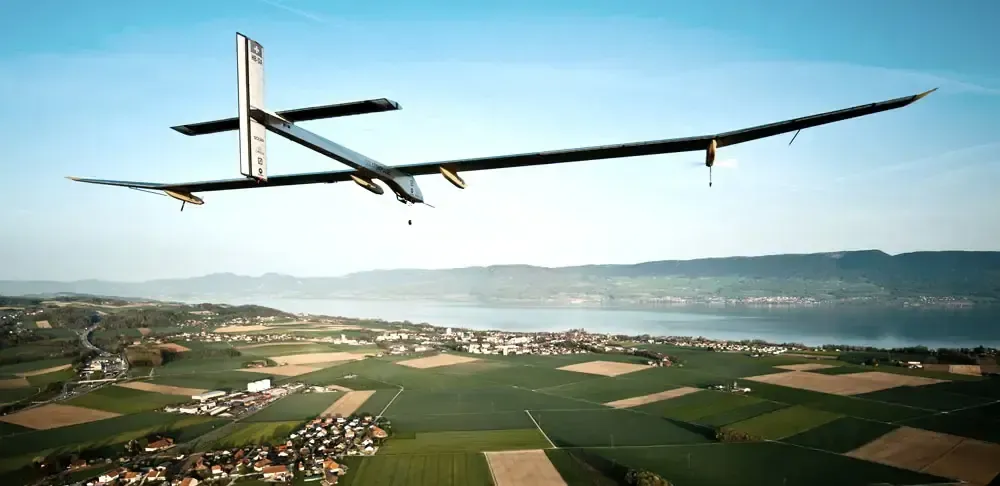
One travel innovation that hasn’t come to fruition just yet, but would dramatically change the impact of the aviation industry for everyone, is the arrival of environmentally-friendly aeroplanes.
Last year saw the world’s longest non-stop, solo flight powered entirely by solar energy with Bertrand Piccard and Andre Borschberg’s Solar Impulse 2. And a series of concept planes designed by NASA recently coupled with innovations from Airbus and European Union that focus on high-density fuel (and thus lower emissions) mean the greatest travel innovation the future might hold is our ability to fly without the guilt of its environmental impact.
There’s an app for that…
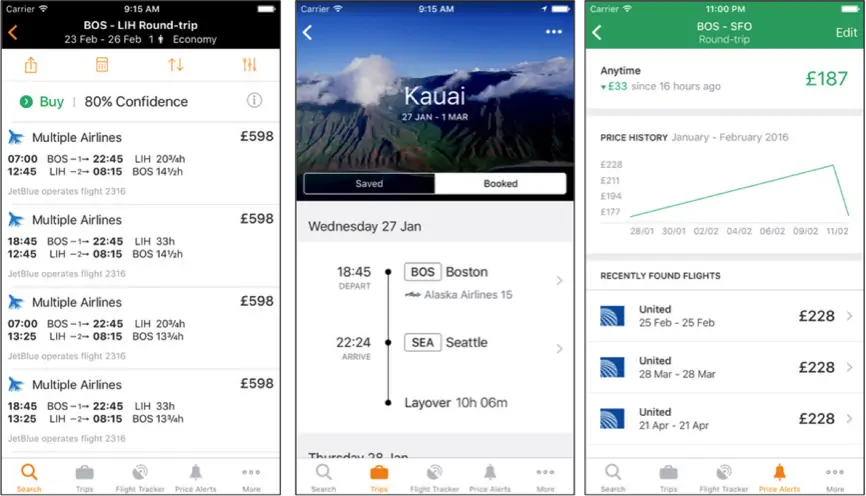
Long gone are the days when we would phone up airlines or visit the local travel agent to book an over-priced tour of Egypt – you don’t need to tell us that things have changed. But it’s important to keep up with how things in the travel world are changing; if only because it’ll save you money.
So, ahem, here’s a travel innovation that’s worth noting: our very own KAYAK app. Rather than being trapped in the mind-reading game of working out whether you buy a flight now or wait – trying to preempt the strange and manic movements of the market – KAYAK’s app gives you a Price Forecast. Using an analysis of historical fare prices, from the endless amounts of flight data we have in the KAYAK vault, it works out, to an 80% accuracy rate, whether your flight price will raise or stay more-or-less the same over the next week.
And if that weren’t innovative enough, whether you use the KAYAK app or the desktop site, you can set an alert to tell you when we’ve found the latest low price for the flight you’re after. Pretty nifty, if we don’t say so ourselves.
~
So there you have it. Technological innovations that eliminate jet-lag, boring flights and environmental guilt – some of the best reasons to get excited about air travel in the modern day. We here at KAYAK have always known the journey is as important as the destination – we’re glad to see the airline industry’s thinking that way too. Let the golden age begin.
KAYAK is not affiliated with or sponsored by any of the brands mentioned and any third party trademarks are the property of their respective owners.